
Introduction
Lung cancer remains the leading cause of cancer-related mortality worldwide, with non–small-cell lung cancer (NSCLC) representing the majority of cases. Tumor development is primarily driven by the accumulation of genomic alterations, among which mutations in KRAS and EGFR are the most frequent.
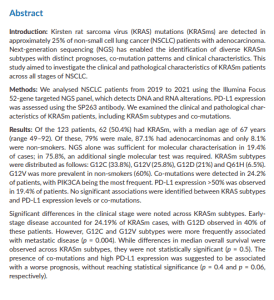
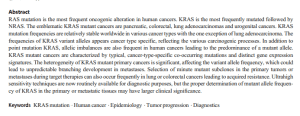
KRAS belongs to the RAS family of small GTP-binding proteins, which regulate essential cellular processes such as proliferation, differentiation, and apoptosis through key signaling pathways including MAPK, STAT, and PI3K. Mutations in KRAS observed in approximately 15–25% of NSCLC cases mainly affect codons G12, G13, and Q61, leading to constitutive activation of downstream signaling. These alterations impair GTPase activity, locking KRAS in its active state and promoting continuous tumor growth.
Molecular and Epidemiological Determinants of KRAS Mutations
 Histological and Ethnic Variability
KRAS mutations are strongly associated with specific tumor characteristics:
- More frequent in lung adenocarcinoma (~30%)
- Rare in squamous cell carcinoma (~5%)
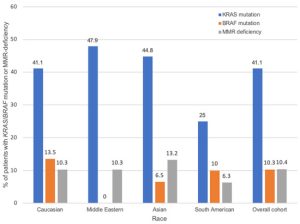
- Higher prevalence in Western populations (25–50%) compared to Asian populations (5–15%)
Importantly, KRAS and EGFR mutations are mutually exclusive, suggesting distinct but functionally overlapping roles in tumorigenesis.
Impact of Tobacco Exposure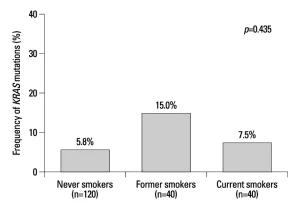
Unlike EGFR mutations, KRAS alterations are closely linked to smoking history. Tobacco carcinogens induce characteristic DNA damage patterns, particularly transversion mutations, which serve as a molecular signature of smoking-related carcinogenesis. Similar mutation patterns are also observed in genes such as TP53.
Prognostic Value of KRAS Mutations in NSCLC
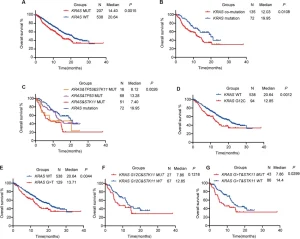
The prognostic significance of KRAS mutations remains controversial:
- Several studies report no significant impact on overall survival (OS)
- Others associate KRAS mutations, especially codon 12 variants, with poorer survival and disease-free outcomes
Meta-analyses suggest that KRAS mutations may act as a negative prognostic factor, particularly in lung adenocarcinoma and early-stage disease, although results are not entirely consistent across studies.
Predictive Role in Targeted Therapy
Response to EGFR Tyrosine Kinase Inhibitors
Targeted therapies such as gefitinib and erlotinib are highly effective in patients with EGFR mutations. However:
- KRAS-mutant tumors show low response rates (~3%)
- Wild-type KRAS tumors show significantly higher responses (~26%)
This indicates that KRAS mutations act as a negative predictive biomarker for response to EGFR inhibitors, although they do not completely exclude potential clinical benefit.
Influence of Smoking on Treatment Outcomes
Smoking status can affect drug metabolism, particularly increasing the clearance of erlotinib, which may influence treatment efficacy and act as a confounding factor in KRAS-mutant patients.
KRAS and Chemotherapy Response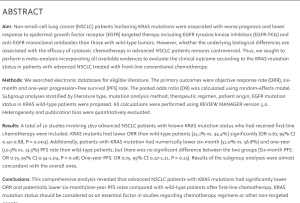
Current evidence suggests that KRAS mutations:
- Do not significantly predict response to standard chemotherapy
- May influence outcomes in specific mutation subtypes ( codon 13)
Emerging data indicate that different KRAS mutations ( G12C, G12D, G12V) may confer distinct drug sensitivities, highlighting the need for mutation-specific therapeutic strategies.
Challenges in Targeting KRAS
Direct inhibition of KRAS has historically been difficult due to:
- Loss of enzymatic activity in mutated forms
- Complex and heterogeneous downstream signaling
- Tumor-specific dependency on different pathways
As a result, KRAS is not yet considered an easily “druggable” target, and alternative strategies are required.
Emerging Therapeutic Strategies – Synthetic Lethality Approaches
Targeting Downstream Pathways
- Combined inhibition of PI3K/mTOR and MEK pathways shows synergistic effects
- Dual pathway blockade can significantly reduce tumor growth
Molecular Targets Under Investigation
Several pathways offer promising therapeutic opportunities:
- NF-κB / TBK1 signaling: essential for survival of KRAS-driven tumors
- LKB1 (STK11): co-mutations lead to aggressive tumor phenotypes
- EZH2: epigenetic regulator linked to metastasis and poor prognosis
- Siah2: regulates RAS/MEK/ERK signaling and tumor progression
- GATA2: critical transcriptional network for KRAS-mutant tumor survival
- IL-8 pathway: promotes angiogenesis and tumor proliferation
- TWIST1: suppresses oncogene-induced senescence and enhances metastasis
- STK33 and CDK4: potential targets for selective tumor inhibition
These approaches rely on synthetic lethal interactions, where targeting complementary pathways selectively kills KRAS-mutant cancer cells.
Clinical Implications and Future Perspectives
KRAS mutations represent an important biomarker in NSCLC, particularly in:
- Smokers
- Adenocarcinoma subtype
Although associated with treatment resistance and poorer prognosis, their predictive value remains complex and context-dependent.
Currently:
- KRAS testing is not used to exclude patients from EGFR-targeted therapy
However, ongoing research and clinical trials are exploring novel targeted combinations and pathway-based strategies, offering promising future directions.
Conclusion
KRAS mutations play a central role in the molecular landscape of NSCLC, driving tumor progression through persistent activation of oncogenic signaling pathways. While their prognostic and predictive value is still under investigation, they are generally associated with resistance to targeted therapies and poorer clinical outcomes.
Advances in understanding KRAS biology and its associated signaling networks are paving the way for innovative therapeutic strategies, particularly through combination therapies and synthetic lethality approaches. Continued collaboration between research and clinical practice will be essential to translate these discoveries into effective treatments.