
Introduction
Colorectal cancer (CRC) is one of the most prevalent cancers worldwide and a leading cause of cancer-related mortality. The development of targeted therapies, particularly anti-EGFR monoclonal antibodies such as cetuximab and panitumumab, has marked a shift toward personalized treatment in metastatic CRC. However, not all patients benefit from these therapies, highlighting the need for reliable predictive biomarkers.
Among these, the KRAS gene has emerged as a critical determinant of therapeutic response. Detecting KRAS mutation status is now an essential step in guiding treatment decisions, as it helps avoid ineffective, toxic, and costly therapies.
 KRAS Gene and Its Role in EGFR Signaling
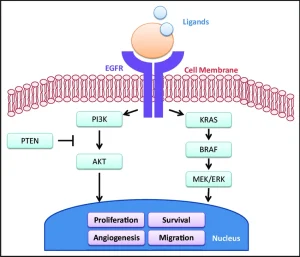
KRAS is a key component of the EGFR signaling pathway, acting as a molecular switch that regulates cell proliferation and survival. It cycles between an active (GTP-bound) and inactive (GDP-bound) state under tight regulatory control.
Mutations in KRAS present in approximately 35–45% of CRC cases lead to a constitutively active protein, independent of EGFR activation. These mutations occur mainly in codons 12 and 13, resulting in continuous downstream signaling and uncontrolled tumor growth.
Because of this independence, tumors harboring KRAS mutations do not respond to anti-EGFR therapies.
Clinical Significance of KRAS Mutation Testing
Predictive Value
KRAS mutation status is a strong predictive biomarker:
- Wild-type KRAS patients: likely to benefit from anti-EGFR therapy
- Mutated KRAS patients: resistant to these treatments
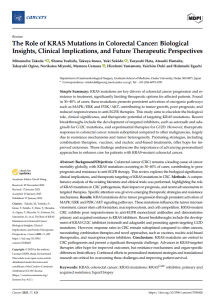 Clinical trials have consistently shown improved response rates, progression-free survival, and overall survival in patients with wild-type KRAS treated with anti-EGFR antibodies.
Prognostic Value
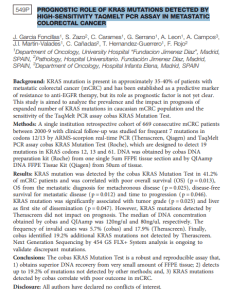
The prognostic role of KRAS mutations remains controversial. Some studies associate KRAS mutations with poorer outcomes, while others show no significant effect. This variability may be due to differences in study design and sample size.
KRAS Testing in Clinical Practice
Testing Frequency
KRAS testing has rapidly increased worldwide and is now standard practice before initiating anti-EGFR therapy in metastatic CRC.
Sample Types
- FFPE tissue (most common): convenient but may yield degraded DNA
- Frozen tissue: higher quality but less practical
- Blood (liquid biopsy): promising but still under investigation
Primary tumors generally reflect metastatic KRAS status, allowing their use for testing.
Detection Methods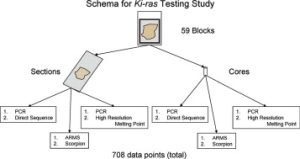
Several molecular techniques are used, mainly PCR-based:
- Sanger sequencing: gold standard, but low sensitivity
- Pyrosequencing: higher sensitivity (5–10%)
- Real-time PCR (ARMS, HRMA): rapid and widely used
- COLD-PCR: highly sensitive method that enriches mutant alleles
Among these, COLD-PCR combined with HRMA or sequencing is emerging as a powerful and cost-effective approach for clinical use.
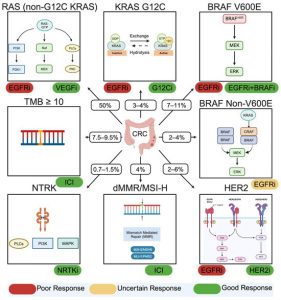
Beyond KRAS – Additional Biomarkers
KRAS alone cannot fully predict treatment response. Other important biomarkers include:
- BRAF mutations: associated with poor prognosis and resistance
- PIK3CA and PTEN alterations: contribute to therapy resistance
- NRAS mutations: linked to lack of response to anti-EGFR therapy
- Microsatellite instability (MSI): important for prognosis and tumor classification
A combined analysis of these markers improves patient selection and can identify up to 70% of non-responders to anti-EGFR therapy.
Conclusion
KRAS mutation testing is a cornerstone of personalized treatment in metastatic colorectal cancer. It plays a crucial role in predicting response to anti-EGFR therapies and avoiding ineffective treatments. While testing methods and standards continue to evolve, integrating KRAS analysis with additional biomarkers such as BRAF, PIK3CA, PTEN, and MSI provides a more comprehensive strategy for optimizing patient outcomes.