
Introduction to Nanotechnology in DNA Research
Nanotechnology applied to DNA focuses on the manipulation, analysis, and engineering of nucleic acids at the molecular level. A major breakthrough in this field was the development of the Polymerase Chain Reaction (PCR), which revolutionized molecular biology by enabling rapid DNA amplification.
PCR has significantly advanced research in:
- Molecular biology
- Biotechnology
- Medical diagnostics
- Genetic engineering
It also led to the development of modern laboratory technologies for DNA analysis and opened new possibilities for nanoscale applications, including biosensors, artificial cells, and DNA-based computation systems.
Advanced Tools for DNA Analysis at Micro- and Nanoscale
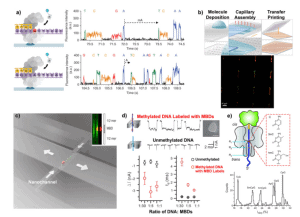
PCR and Electrophoresis Technologies
Modern DNA analysis relies heavily on two key techniques:
- PCR (Polymerase Chain Reaction): Amplifies specific DNA sequences quickly and efficiently
- Electrophoresis: Separates DNA fragments based on size using an electric field
DNA molecules carry a negative charge and migrate in an electric field, with smaller fragments moving faster through a gel matrix.
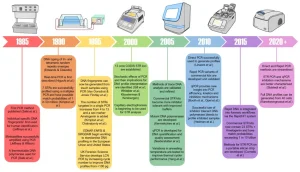
Evolution of PCR Devices
PCR technology has evolved significantly:
- Early systems required large volumes and long processing times
- Modern thermocyclers use Peltier elements for precise temperature control
- Reaction volumes have decreased, and amplification time has been reduced to under 2 hours
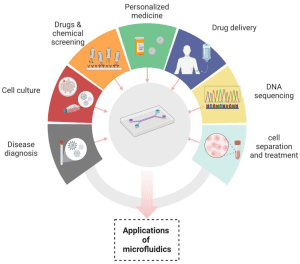
Microfluidics and Nanodevices in DNA Processing
Recent innovations include microfluidic and nanoscale devices capable of integrating multiple functions:
- DNA amplification
- Detection
- Sequencing
These systems offer:
- Faster processing (minutes instead of hours)
- Reduced sample volumes
- High-throughput analysis
Some advanced devices can:
- Perform parallel DNA sequencing
- Analyze multiple samples simultaneously
- Detect genetic mutations with high sensitivity
These technologies are particularly valuable in clinical diagnostics, especially when sample availability is limited.
DNA-Based Computation
Concept of DNA Computing
DNA molecules can be used as information carriers and computational tools due to their ability to store data and perform parallel processing.
Unlike traditional computers that use electrical signals, DNA computing relies on:
- Chemical reactions
- DNA hybridization
- Enzymatic processes
In Vitro DNA Computation
In vitro DNA computing occurs outside living organisms in controlled environments.
Key steps include:
- DNA synthesis
- Amplification using PCR
- Selection of correct solutions through hybridization and electrophoresis
This approach was first demonstrated by Leonard Adleman, who used DNA to solve a mathematical problem (Hamiltonian path problem).
Advantages:
- Massive parallel processing
- High data density
Limitations:
- High material requirements
- Error rates in biochemical reactions
- Limited scalability
In Vivo DNA Computation
In vivo DNA computing takes place inside living cells, using biological processes such as:
- Gene expression
- Protein synthesis
For example:
- Engineered bacteria like Escherichia coli can perform simple logical operations
- Genetic circuits can function as biological switches or memory units
This approach integrates computation with cellular functions, opening new possibilities in synthetic biology.
Modeling Biological Systems and Artificial Cells
Computational Models of Living Systems
Mathematical and computational tools are used to simulate:
- Gene expression
- Protein synthesis
- Cell interactions
These models help predict biological behavior and understand complex systems.
Artificial Cell Development
Artificial cells are simplified models designed to replicate basic cellular functions. For example:
- Minimal cell models with essential genes
- Simulation platforms for studying cellular processes
These systems support research in:
- Systems biology
- Drug development
- Synthetic biology
Modeling Gene Networks and Immune System Interactions
Gene Network Modeling
Gene networks regulate cellular functions through complex interactions. Computational models allow:
- Analysis of gene regulation
- Prediction of expression patterns
- Identification of therapeutic targets
Immune System Simulation
Mathematical models are used to study interactions between:
- B cells (antibody production)
- T cells (immune regulation and cytotoxic activity)
These models help understand:
- Immune responses
- Disease progression
- Cancer and infection mechanisms
Nanotechnology Devices and Artificial Structures
Nanotechnology enables the design of advanced diagnostic and therapeutic tools, including:
- Atomic force microscopes
- Scanning tunneling microscopes
- Laser-based manipulation systems
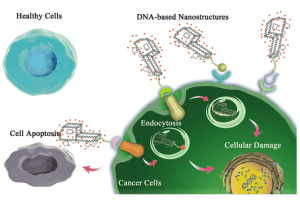
DNA-Based Nanodevices
Examples include:
- DNA nanomachines
- Molecular switches
- Nucleic acid-based sensors
These devices operate at near-atomic resolution and enable precise biological manipulation.
Nanomedicine and Drug Delivery Systems
Nanomedicine applies nanotechnology to diagnosis, treatment, and monitoring of diseases.
Nanoparticles as Drug Carriers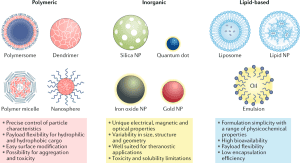
Nanoparticles (10–1000 nm) are widely used for drug delivery due to their ability to:
- Protect drugs from degradation
- Target specific tissues
- Control drug release
Types include:
- Nanocapsules: Drug enclosed in a core
- Nanospheres: Drug dispersed throughout a matrix
Applications include delivery of:
- Antibiotics
- Antiviral drugs
- Proteins and peptides
- Genetic material
Gene Therapy and Antisense Technology
 Antisense Therapy
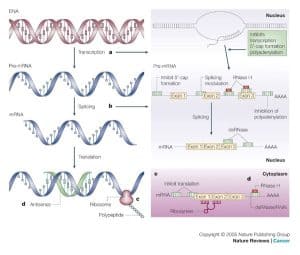
Antisense oligonucleotides are short DNA sequences designed to:
- Bind to specific mRNA
- Block protein synthesis
They are used in:
- Cancer treatment
- Viral infections
Challenges include:
- Low stability
- Poor cellular uptake
Nanoparticles help improve delivery and effectiveness.
Gene Therapy and DNA Vaccines
Gene therapy involves replacing or repairing defective genes.
Applications include:
- Genetic disorders
- Cancer
- Infectious diseases
Nanoparticles are being developed as non-viral vectors to improve safety and delivery efficiency.
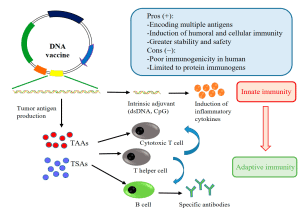
DNA vaccines offer advantages such as:
- Stability
- Low production cost
- Strong immune response
Advanced Drug Delivery Strategies
Nanotechnology also improves delivery of:
- Proteins and peptides
- Hormones
- Vaccines
Innovations include:
- Oral delivery systems using vitamin B12 pathways
- Targeted delivery using biodegradable nanoparticles
- Transport across biological barriers like the blood–brain barrier
Future Perspectives in Nanomedicine
Emerging nanotechnology applications include:
- Nanorobots for targeted drug delivery
- Artificial blood cells capable of transporting oxygen
- Devices for real-time monitoring of body chemistry
- Systems for detecting and destroying cancer cells
These technologies aim to:
- Improve treatment precision
- Reduce side effects
- Enable personalized medicine
Conclusion
Nanotechnology in DNA research and medicine is transforming modern science by enabling precise molecular analysis, advanced diagnostics, and targeted therapies.
While challenges such as cost, scalability, and safety remain, ongoing research continues to expand its potential in:
- Biotechnology
- Medicine
- Computational biology
Nanotechnology is expected to play a key role in the future of genomics, disease treatment, and personalized healthcare.