

Introduction
Nanotechnology has emerged as one of the most transformative scientific fields of the 21st century, fundamentally reshaping how researchers approach problems in biology, me
icine, and biotechnology. By operating at the nanoscale typically between 1 and 100 nanometers scientists can manipulate matter at the level of atoms and molecules, unlocking unique physical, chemical, and biological properties that are not observed at larger scales. This capability enables the rational design of nanoscale materials and devices tailored for specific biological applications, including drug delivery, diagnostic imaging, and molecular sensing.
The integration of nanotechnology with advancements in imaging techniques, bioinformatics, and systems biology has created unprecedented opportunities to explore complex biological systems. These interdisciplinary developments allow researchers to observe and influence biological processes in real time, offering insights into cellular mechanisms, disease progression, and therapeutic responses. Unlike traditional tools, nanotechnology operates at the same scale as biomolecules such as proteins, DNA, and cellular receptors, making it uniquely suited for precise biological interactions.
The potential impact of nanotechnology on biology is profound. It is expected to revolutionize basic research, accelerate drug discovery, improve diagnostic accuracy, and enhance clinical treatments. Near-term applications already include nanoparticle-based drug delivery systems, improved imaging contrast agents, nanoscale biosensors, and lab-on-a-chip devices capable of analyzing single cells. These innovations collectively represent a paradigm shift in how biological research and medical practice are conducted.
Defining Nanotechnology in Biology
According to the National Nanotechnology Initiative, nanotechnology refers to research and technology development at the atomic, molecular, or macromolecular scale, typically within 1–100 nm, where materials exhibit novel properties due to their size. These properties include enhanced reactivity, altered optical behavior, and unique mechanical characteristics.
Examples of nanomaterials relevant to biology include:
- Carbon nanotubes with exceptional strength and conductivity
- Gold nanoshells with tunable optical properties
- Dendrimers, highly branched polymers useful for drug delivery
- Liposomes, lipid-based vesicles for transporting therapeutic agents
- Quantum dots, semiconducting nanoparticles used in imaging
These materials can be chemically modified to attach biological ligands, enabling their use as biosensors, imaging probes, and targeted delivery vehicles.
Nanotechnology Applied to Biological Systems
Size Matters
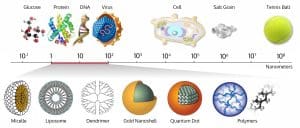
One of the most significant advantages of nanotechnology is the ability to precisely control particle size. Biological systems operate at the nanoscale: proteins are typically a few nanometers in size, cell membranes are about 5–10 nm thick, and viruses range from 20–300 nm. Nanoparticles, therefore, are ideally suited to interact with biological structures without disrupting their natural functions.
Nanoparticles smaller than 20 nm can pass through blood vessel walls, allowing them to reach tissues that are otherwise difficult to access. This property is particularly useful for targeting tumors, which often have leaky vasculature. Similarly, nanoparticles can cross biological barriers such as the blood brain barrier, enabling drug delivery to the central nervous system a major challenge in conventional medicine.
Their small size also allows nanoparticles to avoid rapid clearance by organs such as the spleen and liver. For example, particles must be smaller than approximately 200 nm to pass through splenic filtration systems and liver fenestrae. This enhances their circulation time and increases their likelihood of reaching target tissues.
Moreover, nanoparticles can enter cells via endocytosis and interact directly with intracellular components such as DNA, RNA, and proteins. This capability provides researchers with tools to study cellular processes at an unprecedented level of detail and to deliver therapeutic agents precisely where they are needed.
Solubility and Surface Chemistry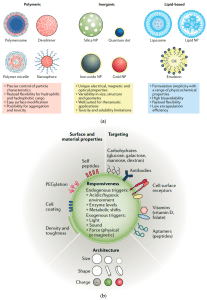
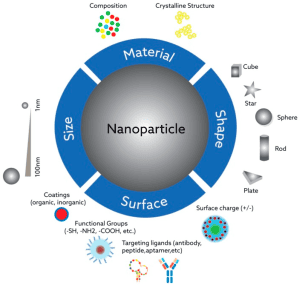
A critical feature of nanoparticles is their modifiable surface chemistry. By altering the outer layer, scientists can attach a wide range of molecules, including drugs, targeting ligands, and imaging agents. This flexibility allows nanoparticles to be customized for specific biological functions.
One important application is improving solubility. Many promising drug candidates fail during development because they are poorly soluble in water, limiting their absorption and effectiveness. Nanoparticles can overcome this limitation by encapsulating or binding these hydrophobic compounds, effectively increasing their solubility and bioavailability.
A common strategy involves coating nanoparticles with hydrophilic polymers such as polyethylene glycol (PEG), a process known as pegylation. This modification enhances solubility, reduces immune recognition, and prolongs circulation time in the bloodstream. Pegylated nanoparticles are less likely to be cleared by the reticuloendothelial system, allowing them to remain in circulation longer and improve therapeutic outcomes.
Surface charge also plays a crucial role. Positively charged (cationic) nanoparticles may interact more readily with negatively charged cell membranes but can also be more toxic. Negatively charged (anionic) or neutral particles tend to exhibit better biocompatibility and longer circulation times. By carefully controlling surface properties, researchers can optimize nanoparticle behavior for specific applications.
Targeting and Drug Delivery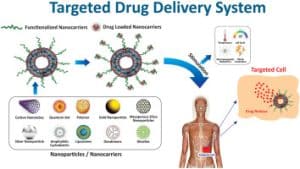
Targeted delivery is one of the most promising applications of nanotechnology in biology and medicine. Traditional drugs often distribute throughout the body, affecting both diseased and healthy tissues, which can lead to significant side effects. Nanoparticles, however, can be engineered to deliver drugs specifically to target cells.
One of the earliest examples is the use of liposomes as drug carriers. Liposomal formulations of drugs such as amphotericin B and doxorubicin have significantly improved therapeutic outcomes by reducing toxicity and enhancing delivery to target tissues.
Targeting can occur through passive or active mechanisms. Passive targeting relies on the enhanced permeability and retention (EPR) effect, where nanoparticles accumulate in tumor tissues due to leaky blood vessels. Active targeting involves attaching ligands such as antibodies, peptides, or small molecules to the nanoparticle surface, enabling them to bind specifically to receptors on target cells.
Common targeting agents include:
- Folate, which binds to folate receptors overexpressed in cancer cells
- Peptides that recognize specific cell surface markers
- Aptamers, short nucleic acid sequences with high binding specificity
- Monoclonal antibodies targeting tumor-associated antigens
Once bound, nanoparticles are often internalized by the cell, releasing their therapeutic payload directly inside the target.
Multifunctionality and Personalized Medicine
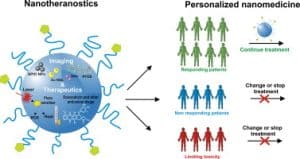
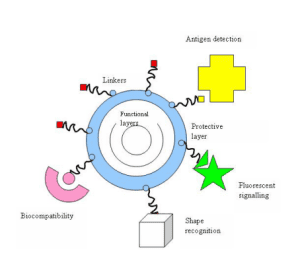
Nanotechnology enables the creation of multifunctional platforms that combine several capabilities within a single particle. For example, a nanoparticle can simultaneously:
- Target a specific cell type
- Deliver a therapeutic drug
- Provide imaging contrast for diagnostics
- Report on treatment effectiveness
This multifunctionality opens the door to personalized medicine, where treatments are tailored to individual patients based on their biological responses. Such systems can monitor disease progression and adjust therapy in real time, improving outcomes and reducing unnecessary treatments.
Applications in Vivo Imaging
Nanoparticles have significantly enhanced medical imaging by improving sensitivity and specificity. For instance, superparamagnetic iron oxide nanoparticles are used as contrast agents in magnetic resonance imaging (MRI) to detect small metastatic lesions that are otherwise difficult to identify.
Gold nanoshells represent another important innovation. These particles can be engineered to absorb and scatter light in the near-infrared range, allowing deep tissue imaging. When targeted to cancer cells, they can also be used for photothermal therapy, where absorbed light is converted into heat to destroy tumor cells.
Quantum dots are widely used for fluorescence imaging due to their bright and stable emission. By adjusting their size, researchers can control the wavelength of light they emit, enabling multiplex imaging of multiple biological targets simultaneously.
Nanoparticles can also track the movement of cells within the body. For example, immune cells labeled with magnetic nanoparticles can be visualized as they migrate to tumors, providing valuable insights into immune responses and disease progression.
Applications in In Vitro Diagnostics
Nanotechnology has also revolutionized laboratory diagnostics. Nanoscale biosensors can detect biomolecules with extremely high sensitivity, often in real time and without the need for complex preparation steps.
Silicon nanowires, for example, can be functionalized with antibodies to detect specific proteins or pathogens. Binding events cause measurable changes in electrical conductance, enabling rapid and sensitive detection.
Quantum dots and gold nanoparticles are used in assays to detect biomarkers at very low concentrations. Their optical properties allow for multiplex detection, where multiple targets can be identified simultaneously using different रंग signals.
These technologies have the potential to significantly improve early disease detection, particularly for conditions such as cancer, where early diagnosis is critical for successful treatment.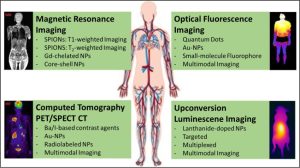
Challenges and Limitations
Despite its promise, nanotechnology faces several challenges that must be addressed before widespread clinical adoption. One major issue is the reproducibility and scalability of nanoparticle synthesis. Complex multifunctional nanoparticles can be difficult to produce consistently, which is essential for regulatory approval and clinical use.
Toxicity is another concern. Some nanoparticles, such as certain carbon-based materials, have been shown to cause inflammation or oxidative stress in biological systems. Understanding and mitigating these effects is crucial for ensuring safety.
Regulatory frameworks must also evolve to address the unique properties of nanomaterials. Standardized testing methods and quality control measures are needed to evaluate their safety and efficacy.
Future Perspectives
The future of nanotechnology in biology is highly promising. Continued advancements in material science, engineering, and computational modeling will enable the development of more sophisticated and reliable nanodevices.
Interdisciplinary collaboration will play a key role in this progress. Biologists, chemists, physicists, and engineers must work together to translate laboratory discoveries into clinical applications.
Emerging areas of research include:
- Smart nanoparticles that respond to environmental stimuli
- Nanorobots capable of performing precise medical interventions
- Integration of nanotechnology with artificial intelligence for diagnostics
These innovations have the potential to transform healthcare by enabling earlier diagnosis, more effective treatments, and improved patient outcomes.
Conclusion
Nanotechnology represents a powerful and versatile tool for modern biology. By operating at the molecular scale, it provides unprecedented control over biological interactions, enabling new approaches to research, diagnostics, and therapy. From targeted drug delivery and advanced imaging to highly sensitive diagnostic tools, nanotechnology is reshaping the landscape of biomedical science.
However, realizing its full potential requires addressing challenges related to safety, standardization, and scalability. With continued research and collaboration, nanotechnology is poised to become a cornerstone of future biological and medical advancements, ultimately improving our ability to understand, diagnose, and treat disease.